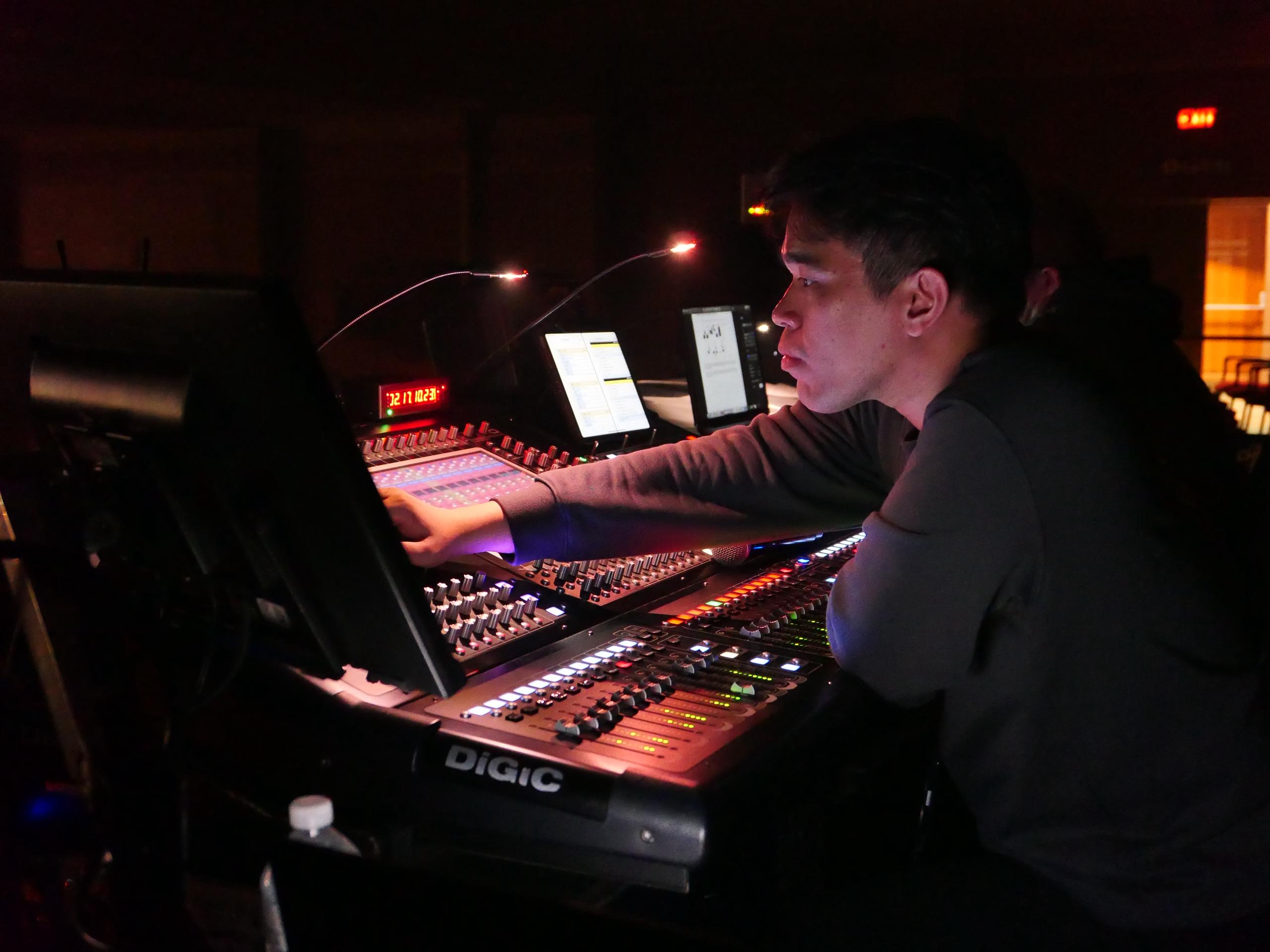
Malaysian-based audio engineer Shou Wei Teoh still remembers how he was browsing audio tech magazines in his father’s shop. He read about people working backstage, consoles, gear and about giant tours like Metallica and others. Young Wei wondered: Wait, you can make a living from that? Fast forward a few years: Wei worked with Metallica during their 2015 concert in Kuala Lumpur. Later, he founded his own Six One Six Production. You meet someone whose career is built on thousands of tiny learnings and decisions: riders marked with microscopic precision, cables routed with care, months of pre-planning before a single fader moves. Reputation in the industry is not just about raw technical expertise, says Wei: It is built on trust. For Wei, it all started with solder fumes, magazines, and absolutely no idea what the industry really looked like.
“I was soldering XLRs when I was ten,” he laughs. His father owned an electrical shop in Malaysia, selling speakers and PA gear, and stocked the house with audio magazines. “Those magazines were like a backstage pass. I kept thinking: There are people who actually do this for a living?”
“Everything I learned in school? Useless for the real world job”
After a two-year audio certificate at a Malaysian music college, Wei walked into his first job and realized:
“What I learned in school… was useless. I didn’t even know which power cable to pass someone,” he admits. His first five years were spent in corporate AV – conferences, gala dinners, launches. “It was the opposite of what I imagined a sound engineer to be. But it also helped me to learn basics.” Elder crew members didn’t understand why anyone would study audio. “For the first six months they were like, ‘How come you don’t know this?’ But eventually they accepted me, and I began learning from them.” This set the tone for his early career: humility, patience, and the long view.
The Leap: Leaving a Better Salary for Worse Pay. On Purpose.
Eventually he realized he needed to chase concerts, not conferences. “I left a higher-paying job for a lower-paying one just to get into concerts,” he says. That second company, a major concert provider, changed everything.
“Week after week we supported touring artists. That’s where I met big engineers, and where I finally saw how the pros work, how they interpret riders, how they plan shows.” This period shaped him. Not through one defining moment, but from “a thousand little pieces,” as he calls them.
The Power of Details: “Your documents should speak for you.”
If Wei is known for anything in Asia’s touring community, it’s his attention to detail.
“I realized some riders were just… ‘I need this, I need that.’ Others were incredibly detailed: schematics, routing, explanations, reasons. I learned to make my own documents as clear as possible, so even if I’m not there, people know exactly what I need, what I want to do. It’s not about insisting on this or that gear. A good rider speaks for your intentions and processes long before you are at the venue.” This reflects his broader approach to engineering: clarity, transparency, respect for everyone on site.
Patience Is the Real Skill
Ask Wei what makes a good engineer, and he doesn’t mention gear or brands.
“It’s trust,” he says. “Sound is subjective. Five people will give you seven opinions. What gets you hired again is trust. People like us handle the most sensitive elements of live shows. We can make it or break it.” That trust takes years. Many years. “You have to enjoy the process of gaining trust. If you’re in this just for fun and quick careers, you won’t make it.” One recent example: working with a renowned classical player and an extremely valuable cello. The musician wouldn’t let anyone near it, except Wei. “He handed it to me. Not because I was more qualified or something. Because we knew each other and he knew how I handle his most precious instrument. That’s trust. You can’t rush that.”
Wei’s Practical Advice for Live Engineers
Looking back, there are some lessons that stand out for Wei:
1. Preplanning starts months before the gig.
“My first soundcheck is months before the real soundcheck. I study the band, I listen to their music, I prepare the rider, I think about microphone choices, stage layout, everything.”
2. Know the music.
“How do you know a kick drum sound is ‘right’? Only in context. You need to listen to the band’s songs a lot before you mix them.”
3. Stay flexible. Gear is not the point.
“Yes, I have preferred consoles or microphones. But that’s not the priority. Whatever supports the production, I adopt. My job is to make the music translate, not to insist on my favorite toys.”
4. Leave your ego behind.
“When I mixed monitors, I learned so much from musicians. I listened. They know what they need. Curiosity beats routine.”
5. Passion isn’t optional.
“If you’re here for fun, it won’t work. It’s long nights, no sleep, tons of responsibility. Passion is the fuel.”
Founding 616: “Everyone has big speakers. We wanted expertise.”
After some years in the industry, he and several colleagues realized: “Everyone had gear. Big speakers, consoles, everything. But the industry was short of people who had the expertise to run shows properly.” So they founded 616 Production, a company that doesn’t own big systems but provides something harder to find: versatile crews with experience, discipline, consistency, and shared values. They mostly work in Malaysia, China and Singapore. “We have 17 people now. When you hire us, you have zero worry about audio. That’s our pride.”
KL, Touring, and the Future
Malaysia’s market is small, and most major shows in Kuala Lumpur are touring productions from China, Taiwan, Europe, or the US. They usually bring their own gear, except speaker systems. “That’s hard when you do rental. But for us, it’s blooming here. For technicians, it’s a great time.” As for the future?
“I don’t know what’s coming. Look how far we’ve come in 60 years. From The Beatles being inaudible during their first concerts to immersive systems everywhere. We are on an incredible tech level. The future might add efficiency. Faster decision-making. Smarter tools.” He stays prepared the same way he always has: “I keep reading. People share tips every day. You just have to know what’s real.”
Why he still does it
“It’s that moment when the house lights go off, the band hits the first note, and I know everything I planned works. you see people enjoying their time. And we were a part of that. It’s a magical moment hard to explain. That’s why.”
About Shou Wei Teoh
Shou Wei Teoh is a Malaysia-based audio engineer and co-founder of 616 production. Besides technical coordination, his main areas are FoH and monitor mixing. He works on worldwide tours and concerts in the asia region. 616 Production works for concert promoters such as Live Nation for many of their major acts in Malaysia. The client lists also includes Astro, a Malaysian satellite pay television; the 616 crew designed and supports an audio system for many live broadcast entertainment shows.